Live with the Founder of Stately.ai
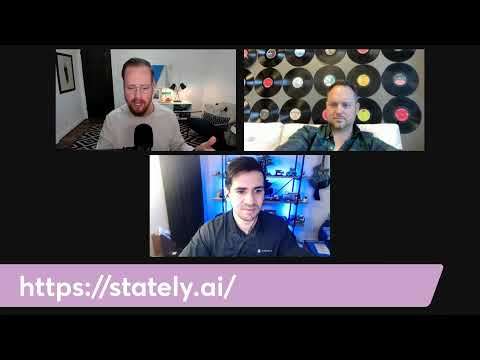
Watch on YouTube (The Unicorn Finders)
What is this talk about?
David is Founder/CEO of a low code solution. He is former Microsoft and left to start a solution to make even the most complex application login visual and accessible to developers and non developers alike. Statey.ai is unique because it's filling a gap in the industry and providing intuitive, visual solutions to problems that virtually every tech company eventually faces. (From the video description.)
“What Stately is trying to do is, make visual tools for developers, designer, stakeholders, basically the entire team for them to collaborate on complex application logic.”
“For the people who are watching us are like, low code, and then I think Dan off air was like, then there's lower code and then there's no code.”
From the opening of the conversation.
Key takeaways
- For the people who are watching us are like, low code, and then I think Dan off air was like, then there's lower code and then there's no code. 8:00
- I had a couple of investors actually message me and say, Hey, you should really consider making this into an actual product. 11:00
- I think about like, a year and a half ago, about like, hey, you should turn this into a product. 13:00
- Was at Microsoft, contributing to this XState tech, this open source community started to build up, you know, connections community. 18:00
- Man, it seems like you've not only got a great product, but, you know, a product that can make sense at any company. 29:00
Quoted from the transcript. Conversations include other speakers.
Full transcript
From YouTube auto-captions. Punctuation and capitals were restored automatically. Technical terms were normalized; some errors remain. 5,449 words.
0:00 Introduction
Just the most epic countdown music. I, I think, but I, you know what, you know what they should do. Stream Yard if if anybody on your product team is watching this, we also need to get stream Yard on the show too. Yeah, you need to add customizable uploads for music and countdowns like that'll be pretty tight. I think you can not to taught you after, Okay, well, maybe we should look into that. So, all that being said, hello everybody, happy Thursday. Today's Thursday. We're very excited to be with you all. We are missing our third, musketeer, third amigo, because, we're gonna. We're going to Mexico next week for our rewards trip so we can do the Amigo thing. But, Jake got caught in a meeting. So it's Dan, me and David this morning. So David, thanks for joining us this morning. I appreciate it. Ma'am, yeah, thanks for having me.
So, John goes, whoa, a countdown, oh, whoa, whoa, whoa, whoa. You may need to work on those, those words this morning. So all right, listen, for those of you who are tuning in this morning, you're like, wait a minute, what's unicorn finders? Like? What is this thing? There's a unicorn and that's purple, and here's the deal. So basically, when Covet hit March 2020, Dan Jake and I Jake is not here. We are very good friends. We started to hang out on my podcast, we did a few things. We're like, why don't we just start something to where we all hung out every week and we brought in our connections? So Dan, Jake and I'll let Dan introduce himself real quick to you all. But basically, I've been recruiting for 10 years, Dan's been doing it for really as well and then Jake about the same. So like, we got 30 years of experience, we know a lot of people, so let's bring people on to the show where we all hang out together.
It's kind of morphed and to now we are actually focusing specifically on startups, unicorns, right? People in the tech space who are doing really cool stuff. And I had the pleasure of meeting David on my show and podcast, guidance Country 2.0 and his products, really cool. So we're going to talk about it, but. Before we dive in, Dan, give a quick background. For people who are watching, yeah, no. It's a pleasure to be back again. And Dave, it's a pleasure to meet you. Dave and I were chatting right before we got started. Found out that we grew up about 10 minutes away from each other. I'm in sunny south Florida, so always great to find another, friend that grew up close. But no, my name is Dan. Uh. As you guys know, I run our Tampa technology practice down here for Vaco. I'm super excited, the weather is beautiful.
It's perfect Florida weather, you know, I love it. We're supposed to get snow again this weekend. We got six inches, last week, and now we're gonna potentially get more snow this week. So I'm not gonna, I'm not gonna lie, Taylor. It's been about 50 years, or 40, 40, some odd years since we got snow here in Tampa. So the fact that it even has snowed in Florida, period, is like, crazy to think about. But we're, this is not a weather podcast. So all that being said, David, give the people what they want. Who are you? You know, what do you do? And then we'll kind of more dive into your product. Hey, sure, yeah, I'm David Corshid, I'm at David KP and I'm pretty much everywhere online, Twitter, LinkedIn. Whatever. And so, as the name suggests, I've, I played piano for like, a long time, but I'm also a developer.
I've been a developer for about 10 or 11 years. I, I just came from Microsoft, I was at Microsoft for four years and then I decided to do my own thing. So, I working at Microsoft. Yet to wear so many hats. So I've touched front and back and infrastructure, just, everything.
4:00 I mean, software is not possible without state machines
And so now I'm just really excited to be doing my own thing. I love it. Very brief background, very brief. We, we like it, we like it. So David, first question for you, man, talk about what your product is sure? So, first of all, I want to talk about exactly what it solves. And I worked in many startups and of course, big companies like Microsoft. And there's just this lack of communication between different parts of the team developers, designers. And stakeholders. And that's because the software we write becomes so complex that it's hard to, to determine. Like, what the features are, what the use cases are, what things are going to break, do the features, and does the software actually match the design? And, just communicating between, like those three types of people, developers, designers and stakeholders. And so we have documentation, we have diagrams that we could write, we have tests that we can make to make our software more robust and understandable.
However, those go out of sync really fast. Ask any developer and they're going to agree with you if their code is lucky enough to have these, you know, kinds of things at all. And so, what Stately is trying to do is, make visual tools for developers, designer, stakeholders, basically the entire team for them to collaborate on complex application logic. And so the underlying technology behind this is, what's known as a state machine, and so state machines have been used in software. I mean, software is not possible without state machines. Neither is electrons. It's really, really old technology, and, state machines are pretty much everywhere in software. So we're just creating tools to help, the entire team collaborate on them. You know, just visualize them in your application and see how it can make your code a lot more robust. And to automate, you know, collaboration and documentation and test generation, you know, for the entire team.
So, so, David, I've got a. I got a question. Obviously, you and I could talk for hours, maybe even days, about state machines. But let's consider there's maybe somebody on the podcast or that's listening that doesn't know what a state machine is. What, what is that? And how does your, product, or your solution, help make that a little bit more deliverable? To the average, you know, business user? Yeah, so state machines are actually a lot simpler than, they sound. It's not like, thank you for asking that, Dan. I have no idea. It's a really great and essential question. And honestly, anyone can understand that not just developers, but, state machines are basically boxes and arrows where you could only be in one box at a time. And you? So, when something happens, you follow an arrow and you're in a different box. That sounds really abstract. So to make a really simple example, take, you know, humans, for instance, we're either asleep or awake, right?
We can't be both asleep and awake at the same time. Otherwise, go see a doctor, please. But, you transition from the sleep state to the awake state, when something like an alarm goes off, right? So that alarm going off is an event that makes a transition. And so the way that you behave when you're in the sleep state is different than you behave in the awake state. So that is just a really simple state machine right there, you have two states, asleep or awake, you have transitions that go between those states. And, funny enough, this simple mathematical formalism describes how virtually all software works. If you've ever interacted with a multi-step form, if you ever had to do some sort of automated workflow on the back end. If you've ever played with Zapier, or if this than that, those are just state machines. Those can be described by the same mathematical principles that is used in pretty much all technology. So I want to talk about that real quick, right?
8:00 I, I was working on this open source project called X84
For the people who are watching us are like, low code, and then I think Dan off air was like, then there's lower code and then there's no code. So real quick for the people who are watching. I asked this question before we went live. So no code solution is like a squarespace or webflow, right? So very, very little or no code, right? Basically, it just stands it up and you get after it. So you said, Stately is a low code, right? So essentially there is still some coding that needs to be done within Stately, right? Yeah, and so when? When you consider low code with developers, low code is not just like a fancy visual environments. For, you know, for doing simple tasks. It's more like, low code is, the code that you don't have to write. And so developers, we actually really embrace low code in the technical sense, but not really so much in the traditional sense of dragging and dropping things. You're not going to. See developers doing like using drag and drop editors, or, you know, things like Squarespace or WiX or Webflow too much.
They really want to get down and dirty into the code. However, the less code that the developers can write, the better. And so, yeah, that's one of the big differences is that this is really low code for developers, or at least developer first. I love that, so David, I want to, I want to ask you. So, you know, we've seen a rise of, I'm not even going to talk about no code, but of lower code and low code products. Over the last, you know, five years, obviously, they've been around longer and everything else. What was it about? Kind of a hole in the market that you saw that made you want to create an additional product and not just latch on to. You know, a zapier or whatnot? Well, I actually took a different approach than in the companies that you've mentioned, and it actually came to me by surprise. So I, I was working on this open source project called X84.
Actually, the last six years, and this is primarily as open source goes. It's a developer first tool, for allowing developers to create this content. XState like the letter X, and then states, and that's, that's one word, so don't do like x, dash, state or anything. I've seen many people do that, but anyway, so, XD is primarily for developers wanting to create complex logic in a way that can be visualized and more robust. And so at first it was just a fun project for me. But then, a lot of companies started using it, even Microsoft themselves. You know, AWS is using it for their amplify, amplify, authentication stuff. There's a holds on the companies that I'm not gonna list right now. But I realized that, okay, this thing is getting really popular. And I had to work nights and weekends on this open source project. And I've had a few collaborators which have been extremely helpful.
But then, yeah, I. I had a couple of investors actually message me and say, Hey, you should really consider making this into an actual product. So that's when I started thinking, like. How can I really turn this into a product? It's open source, it's free. And then I realize that there's a lot of tools on the market that are sort of doing a lesser version, a less complex version of what we're doing. And so the reason for it is because the majority of low code products today are focused on non-developers, or so-called citizen developers. People who don't want to learn a full-fledged programming language. And they just wants to make stuff, and what I realized is that developers are sort of the same way. It's not that we don't want to program, but we just want to make stuff we don't want to. You know, have to think about the edge cases and the logic, and like, do all that coding.
So, that. That's when I figured, like, Hey, you know? We could make tools and services for developers and for collaboration with developers, designers and stakeholders. That could be really useful to the entire team. And basically, provide the benefits that we're already providing with XState, but in a, you know, in a productized form. So you mentioned something about talking to investors, and I want to dive into that, right? So so we talked about kind of the nuts and bolts. I want to talk about your story a little bit and talking to investors, so there's so. There's going to be people that watch this now, in the future, that may have an idea. And they're like, I don't know anything about investors. Or talking, you know, networking, all that stuff. Talk about your journey with that, because I think your journey is kind of like what I just said. Like, you didn't have much experience.
So can you dive into that and talk about your journey? With talking to investors and getting that funding? Yeah, so for the longest time, I actually, you know, just really want to start a company. But that seemed like a monumental cliff to climb. Because I, I didn't know the first thing about. It's like, just, you know, quitting my job and starting a company, it just seems really fearful. Like, you know, you, you have a salary and then all of a sudden you don't. It's like, Okay, how are you going to make money? So, a lot of. People, I guess, save and bootstrap and all of that, but, like I said, I was working on this open source project. You know, nights and weekends. I got some funding from GitHub, sponsors, which, I mean, I'm really thankful for that. But it's like, you know, a few hundred dollars a month, it's you, you cannot live off of that.
So I, I was actually contacted by an investor. I think about like, a year and a half ago, about like, hey, you should turn this into a product. And then that's what really forced me to dive into the deep end and start researching. You know what this is all about? It's not just like, talk to the investor, pitch them, they say yes, they give you money, it's it's a lot more complicated than that. But so the first thing I did was actually talk to other founders, and people who have, you know, started their own companies and just asked them for advice. And so that's why I think that having a network is probably the of paramount's importance here. Because, you want to have a lot of people that you could talk to. And you want to have people too who are like, Hey, I could introduce you to my investors and we could see.
You know whether, you're both of your goals align and your values? So, so, yeah, I think network is definitely most important. So David, I want to ask you, so obviously you're, you're able to talk to an investor, you're able to get some money. But yeah, one of the things I want to talk to you about is you mentioned. You know your network and what you learned from other founders, what, what did you learn? And then how did you? Or I guess what are? What are some of the pieces of advice that maybe you didn't know going into starting a business? But more importantly, how did you then parlay that into building beyond just a product, but actually building a business with your, with your investment? So, like I, I told you that, you know, network is, you know, the, you know, one of the most important things, but, so is community.
I, I and this. Sort of segues into your question. But I think that, like in the past, first to market was most important, but now it's really first to community. Like, you could definitely be first to market. But that doesn't matter if there's someone else with a huge community behind it. So, you know, for the last, five or so years, I've been building up like, just, the XState community. And people using XState and contributing ideas and asking questions, and just building really, really cool stuff with it. And so that's what's like, really valuable to investors. I, I will say that the first investor I talked to actually did reject me. So that was sort of a, a hard lesson to learn. Yeah, but yeah, so talking to other founders and stuff, they told me like, here's what to avoid, here's what's to, you know, to look for, here's how to structure your pitch deck. But I think one of the most important things is just having a crystal clear, like vision of what the product is.
And how, how it's going to eventually make money, because at the end of the day, that's what investors, really want to see. What's what's the major suggestion you have? From a pitch perspective? I know you just had clear, defined products, but like, is there any other like no-no's? Or people should stay away from when trying to pitch their product to investors? I would say, just again, being ambiguous about, like, I, I. I actually saw a bunch of pitch decks, you know, from friends, where it's like, they have a really, really good, you know, project. Whether it's open source or just something that's really popular, but there's no clear vision to like, all right, how is this actually going to make money in the future? And so you can't really sell investors on. Hey, we're popular, because, you know, there's tons of tools that are popular, but there's zero way for, you know, those tools to make money.
So, yeah, I would say, that's. And avoid also avoid taking like the very first or second deal that you're presented to. I. I've been told by advisors like, even if someone says, like, here's like a. Few million dollars like shop around because you don't want to. You know, you. You want to be with investors who really value, you know, your vision, and aren't just looking to, you know, cash outs or something like that. Because, I, I've discovered that investors are more than just money. They're people who you need to talk to, you need to bounce ideas off of, and you need to get advice from as well. And so they, they need to also be mentors to you. Interesting interest so then for so from running a business, right? So you took an idea, so basically, basically your journey, your product journey, right? Was at Microsoft, contributing to this XState tech, this open source community started to build up, you know, connections community.
Then you went to, left, Microsoft started this idea pitch to investors. Talk about that now or so. So now. It's like trying to bring people around you. So it's like, like, who was your first hire, right? Because so I'm interested in that, like, who did you decide? Like, what position did you decide to hire first, and why? Well, as this is primarily a developer-focused product, we had to, you know, just hire developers, for this. So I, I actually hired, three people pretty much at the same time, and by, hired. I mean, like, we were talking about this for a while. We had like a private Discord chat where I was like, Hey, I'm, I'm trying to raise funding right now to pay you all. And, let's just talk about, like, the future ideas that we want. And so these are three people who have actually been in the community for a while and have been, you know, contributing heavily to, you know, the open source project.
And who are just really, really good engineers. So, yeah, we just had a very strong technical team. And then after that I realized, Okay, now I need to actually hire people for, developer advocacy and especially things like, administration and office management. Just because I realized that I was spending half of my time doing all of that, like payroll and, you know, contracts and stuff like that. So it was actually a godsend to, you know, have someone, someone. Taking care of those responsibilities, for sure. So where, where do you guys go? You know, from here now. Now you're like, you know, we're talking about building a business. You know, you, you've moved on from just a product into, you know, building a full-fledged, you know company. You know, how do you guys grow, how do you guys iterate, like, where do you guys go from here, and how do you guys ultimately come up with?
Your vision? Being that you guys are still relatively young, still growing, and there's obviously a lot of different directions you guys can go well. So, my personal philosophy on this is, talk to users. So obviously you need like a five, a ten year goal, but that really has to be like a North Star goal, not a single track, vision. And so by talking to our users, we start to discover a lot of emergent use cases. And so I, I mentioned that the underlying technology behind this is, state machines. And so when I first created XD, you know, I saw people using it in the front end, uh. But then we started seeing people use it for serverless workflows. And even chat bots, smart contracts, things like that, and so, that is sort of like, you know, we have the same north, you know, Northern star of improving collaboration between the entire team.
But now we're seeing like, okay, there's a lot of different products and features that could come from just talking to users. And so I think one of our biggest goals is growing the community. And so we have to grow our team and hire more people in order to help do that. Because, you know, it can't just be, you know, me and one other person writing blog posts and reaching out and everything. There's only so many hours in the day. Yeah, and so that's really how we grow. So any exciting things you guys have on the rise in any new releases or anything like that? Yeah, so, uh. By the end of the month we are going to be releasing the open beta of our visual editor. Which is that, you know, collaborative design Slash development tool. I. I don't know what you want to call it.
Just because it, it really encompasses like a combination of things where, it's not just like your, you know, Lucidcharts or Draw.I O. Where you draw pretty diagrams, it's like the diagrams that you make are actually usable. They're their code, you could export them as code, you could, you know, just simulate them and validate them and everything. But yeah, we, you know, we're working on the editor, and, you know, just working on making it become a full-fledged design, development, and collaboration tool. With important features for the entire team. And we're also working on expanding our open source offerings because open source is important. You know, you can't charge for everything, and open source is great for, uh. Building the community and providing more value to people who do use our services and tools. So you keep I, I wanna I. I guess I have two questions, one, you keep talking about community and why it's so important.
And I feel like not many. I mean, Dan, correct me if I'm wrong, I, I just. I just don't talk to a lot of startups and companies in general that talk about community a lot. And so where, where does this community? I guess, passion come from? So what I've seen, the community, passion comes from, basically just seeing all the possibilities that, you know, we've been working on. Like with state machines, the realization that you could use state machines for so many different things. But it's not just the technology, it's really the people. Our entire team have been just so hyper focused on, being there for our users. And it's helpful that we're in different time zones. Because when, whenever anyone asks for help in our Discord channel, someone's going to be there just helping them out, right? Um? And so that kind of thing is really valuable to developers and companies who are like we. We're considering using the software, but we need to make sure that we have the supports.
You know, when we could get it, so yeah, we just been really, really, you know, passionate with our, yeah, with helping out our users, um. And also the nature of the technology we use means that there's no like disagreements or anything there's, you know, people aren't like.
24:00 The best way to get your product information out there organically…
Hey, it should have been this way or that way. We're like, no, this is a formalism like. This is something that has been established decades ago and it's not changing or going anywhere. And so that gives a lot of people, ease of mind, too. Is that how you guys have grown, you know, as a company as well, and how you guys have attracted new, you know, companies and new users? Is that, you know, this is a formalized product? It's not so much me selling you on, you know, the idea, as much as it's selling you on. Here's a solution to what's a problem that you're already facing. Yeah, yeah, exactly. Sorry, I forgot the question. No, no, mean, I don't know if there's so much of a question. As much as I was like, yeah, I would. I just want to make sure that I'm hearing you, right. But I guess from there is, you know, how do you guys grow?
I mean, have you guys grown pretty organically, you know, just through word of mouth, or do you have sales? Folks? I mean, obviously you have the community aspect of it, but how are you growing and getting your product name out there more? I mean, it's been pretty organic. Back before Kovit, I used to just go to lots of conferences and give talks about just the ideas. You know, behind state machines, XState and all of that, and you know, right now we have to basically do all of that virtually. But, yeah, we don't have sales people yet. And I like, honestly. I think that word of mouth is a lot more valuable than just trying to hire sales people. Because, sales people and marketing that sort of like brute forcing it. Eventually, we'll grow to where we need that. But if you, and by you, I mean anyone who wants to start their own company. If you can do it organically, like, just focus on that, because that's going to be validation that your idea is worth spreading.
I mean, you could force it down people's throats, but like, that's it, it doesn't validate it at all. Yeah, well, and I think that's where that's another conversation with Devrel and developer advocates and creating content for. Companies, I think have really been a focus in the tech space in the last year, year and a half, two years. Because of Covid, right? You can't go to meetups, you can't go to conferences. And so the best way to get your product information out there organically is to hire tech people who like to run their mouths and create content. And then share, obviously, your, your, all your secrets. So the last question I want to ask as we wrap up here, David how, how do people? And this and this is just really for me. How do people integrate your software with their current offerings? Right? So, like, so, like, if a company's watches, they're like, I like the sound of this. Like, what problem do I have to have in my organization, or a problem in my code or whatever?
To, to, to call you and Stately like, like, where? Where is the disconnect? To leverage your software within organizations, right? So the simple, like entryway question is, do you understand all the features in your application?
27:00 Whether you use it for the actual implementation…
I mean that's really important for communicating to users. Just what can your application do? What are the different? You know, just states of it, and the answer is, you know, sometimes yes. It's like, Oh, I guess. We could search the code base or look through some user stories, and hopefully those user stories aren't out of date, uh. But then they quickly realized, okay, we need a better way of, just, you know, having a single source for just what our application can do, how it works and everything. And just, you know, being able to communicate that with developers, designers and stakeholders without that information going out of date. So I guess the entry point is, you know, if the answer to that question is no, not really, you know, we need something more robust. Then Stately can be used, or at least will be able to be used in the future. For being able to organize all that information in a way that syncs with the actual implementation, which means it's not going to go out of date.
It's not going to be a diagram that you create that you know the developer changes something, and then you know the diagram is. Worthless. It's going to be something that lives with your code and changes over time, and becomes a really powerful knowledge source for your entire team. So, yeah, your product is like, a big hug is what that is. It's basically just like it's just kind of wrapping your arms around, right? Yeah, yeah. Whether you use it for the actual implementation, which is the developer side, or for describing, you know, the flow of the application. Which is the design side? Or for even listing out user features, which is the stakeholder side, or for testing analytics. We, we have a lot of things planned. So, whatever stage you're at with creating your app, whether it's Greenfield or an existing legacy app, you're going to find our stuff useful.
That's cool, there you go. Well, that's awesome. Dan, any more questions for you? No, I mean, that's great, that's a really cool product. And I know that you're in a really great ecosystem there in Orlando.
29:00 Y'all have a great Thursday and we'll see you all next…
As somebody that was involved in the startup scene there in Orlando. You've got a great group of people around you, you've got a lot of great, you know, incubators and thought leaders and everything else. I'm glad to see that it's still thriving and doing well, and I'm glad that you're a part of it. Man, it seems like you've not only got a great product, but, you know, a product that can make sense at any company. You know, or. Or, I mean, there's, there's thousands of use cases that I'm sure exist out there. So I'm in rooting for you and excited for your continued success. Yep, thank you, appreciate it, absolutely. So y'all again, thank you for hanging out with us this morning. Unicorn finders keep it short and simple 30 minutes this morning. If you want to connect, with, David, what? David? What's your Twitter handle? Again? It is David K.
Piano cool. And then obviously I threw up the website. Ryan's over here saying, sounds awesome. As a low code fan, looking forward to seeing where this goes. I love it. We're already creating fans in this. I love that so much. So you all have a great one. Next week? Do we have a guest next week? I think? We do, yeah, yeah, we do so next week. We are having a really cool company, verify on and they're based in Nashville, they're doing some cool stuff. So again, I'll share all the information. So David, thank you for coming on hanging out with us today. And y'all have a great Thursday and we'll see you all next week. See you guys, thank you.
Related talks
-
Founder to Founder: Stately AI
Gun.io Founder to Founder podcast, Ep. 36, 2023. 28:53, 1.5K views -
Bus Factor, Pair Programming and VS Code Live Share
Fun Fun Function, 2020. 7:30, 4.6K views -
Panel: The Future of the World and AI
Agent Conf 2023. 25:58 -
The Actor Model, Behind the Scenes
JSConf, 2024. 32:42, 4.4K views